
Commercial construction projects are more advanced than ever and new delivery methods and available technology require the process to be collaborative from start to finish. We believe Design-Build is becoming more common and therefore worth an exploration on when this delivery method is used, why it leads to more change orders, and how trade partners can better collaborate and reduce risk.
Key Takeaways
- Shift in Delivery: Design-build is replacing traditional design-bid-build, moving from separate contracts to a single architect-contractor team.
- Increased Change Orders: Because designs are often schematic when contracts are signed, change orders are used frequently to finalize costs.
- GMP Contracts: Guaranteed Maximum Price (GMP) contracts rely on allowances to act as placeholders for undefined project costs.
- Financial Risk: Inefficient change order tracking can lead to millions in lost revenue or legal disputes.
- Digital Solutions: Moving from spreadsheets to dedicated communication platforms creates transparency and ensures no requests slip through the cracks.
Understanding the design-build method
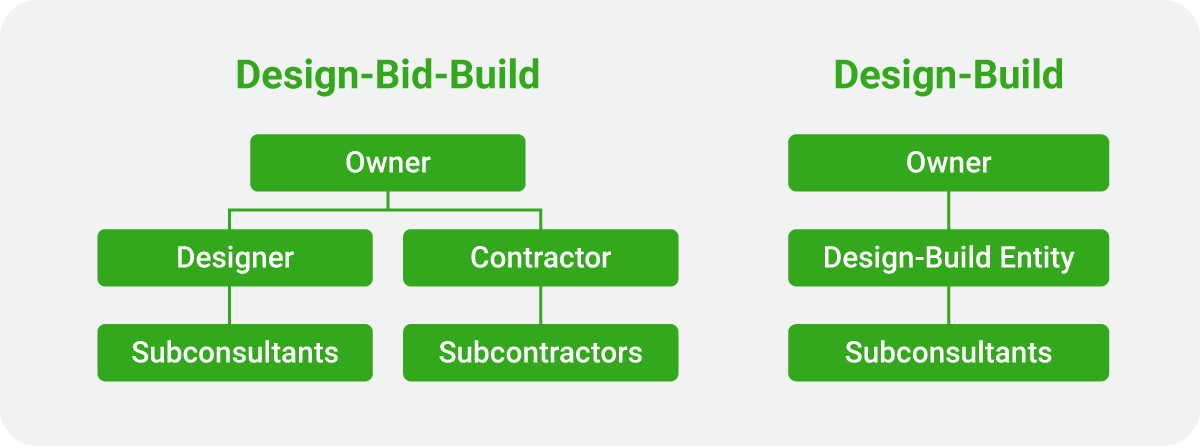
Historically, construction projects were carried out under a design-bid-build delivery method, where the owner held separate contracts with the architect and the contractor. Design documents were completed, then contractors would bid the scope based on the complete set of drawings and build the project. Any changes to the scope of work were clear and easier to define as extra work because contractors were working with complete drawings. While this method is fairly straightforward, it isn’t without its share of challenges. If a portion of the design is incomplete, incorrect or a change is made, it creates an adversarial relationship between the architect and the contractor as they dispute who is responsible for the additional cost and schedule.
Owners have begun to move away from this method to more collaborative project delivery types, like design-build. In a design-build delivery, the owner has one contract with an architect-contractor team. In this scenario, both the contractor and the architect work together from the beginning design stages through completion, collaboratively solving problems together to meet the owner’s budget, schedule, and design vision. Design-build was once considered an “alternative” delivery type, but now about half of all projects delivered use this method or a hybrid design-build approach where certain trades are designed underneath the GC like the MEPFS.
Technology brings more changes
Design-build brings collaboration and innovation to projects, as teams leverage technology to design and price each scope of work. It’s typical for owners, architects and contractors to collaborate to make dozens of changes to meet the needs of the projects. Construction technology, including 3D design tools like AutoCAD and Revit, make the design process much faster than traditional methods.
With estimating tools like Assemble, changes are drawn and priced in a matter of hours, if not minutes, making design changes faster to generate and incorporate. The fast-paced nature of the design-build process has made change orders a major financial risk to projects.
Why design-build produces more change orders
Because the construction industry has shifted to a collaborative design-build process, building sets of plans are typically only schematic and are not finalized when the General Contractor is brought on board. That’s why the industry has largely moved away from stipulated sum contracts and relies more on GMP (Guaranteed Maximum Price) contracts.
A GMP contract is where the General Contractor guarantees a maximum price based on a list of project assumptions and the current state of design. To do this, General Contractors build in allowances for anticipated costs to complete the project.
These allowances act as placeholders for anticipated costs, including:
- Design development
- Undefined material procurement
- Overtime for compressed schedules
- Trade damage and cost escalation
- Unforeseen site conditions
These placeholders are eventually swapped out with actual costs through the Change Order process.This delivery type results in numerous change orders that are issued rapidly and frequently throughout the project. Because of this, Change Orders today play a more crucial role than ever before. They are the essential process to track changes to each party’s original contract.
Risks caused by change orders
Because General Contractors assume more risk under a design-build delivery method, diligent Change Order tracking is crucial to staying on top of costs and ensuring any changes beyond the initial scope are either covered by an allowance in the GMP or reimbursed by the owner. When the Change Order communication process is inefficient, cumbersome, or just plain sloppy, the financial implications are enormous. Change Orders can easily soar into the millions of dollars, and if there’s a dispute over work completed or who owes whom, the disagreements can escalate into lost wages, lawsuits and financial ruin.
Effective Change Order management can make or break the project budget during design-build delivery, and General Contractors track changes using a Change Order Log, typically in a spreadsheet. It takes multiple employees several hours each week to gather Change Order Requests from subcontractors and manage the Change Order Log for the multiple trades on each project.
Using spreadsheets and email to gather (more like hunt down!) Change Order Requests from subcontractors leaves General Contractors at risk. CORs can easily slip through the cracks or get submitted too late for reimbursement, which reduces a GC’s already slim margins.
How better change order communication reduces risk
General Contractors can reduce financial risk by communicating all Change Order cost information in real time in one central location. By transitioning from crowded email inboxes and out-of-date spreadsheets to an organized Change Order Communication platform, contractors can streamline their process and create transparency between all trade partners on the project.
Change order communication is a win-win for all Subs, GCs and Owners. To learn more about Clearstory and see how thousands of contractors are improving their change order process, connect with one of our experts at info@clearstory.build or by requesting a free demo.
Frequently asked questions
What is a change order in design-build construction?
In design-build work, a change order is a written agreement that updates the original contract whenever the scope, cost, or schedule shifts. It spells out the change, the added or saved dollars, and any days added to the timeline, keeping the owner, designer, and builder aligned.
Why does the design-build method create more change orders than design-bid-build?
Because the contractor joins the team while the design is still in progress. As the team refines drawings, materials, and schedule, many assumptions change. Each adjustment is priced and documented with a change order, so design-build jobs see more change orders than traditional design-bid-build projects where plans are complete before work begins.
What should every change order include?
- Project name and date
- Description of the change and why it’s needed
- Added or deducted cost
- Added or deducted days
- Updated contract value
- Reference drawings or documents
- Signatures of owner, designer, and contractor
How can contractors reduce the financial risk of frequent change orders?
Keep all change pricing and approvals in one place. A cloud platform such as Clearstory lets subs, general contractors, and owners view costs, status, and approvals in real time, reducing missed charges and speeding payment.
What are the five key phases of a design-build project?
- Schematic Design – establish concept and budget.
- Design Development – add detail and select systems.
- Construction Documents – finalize drawings for permits and construction.
- Pricing & GMP Agreement – set the Guaranteed Maximum Price.
- Construction & Closeout – build, track change orders, and turn over the project.